

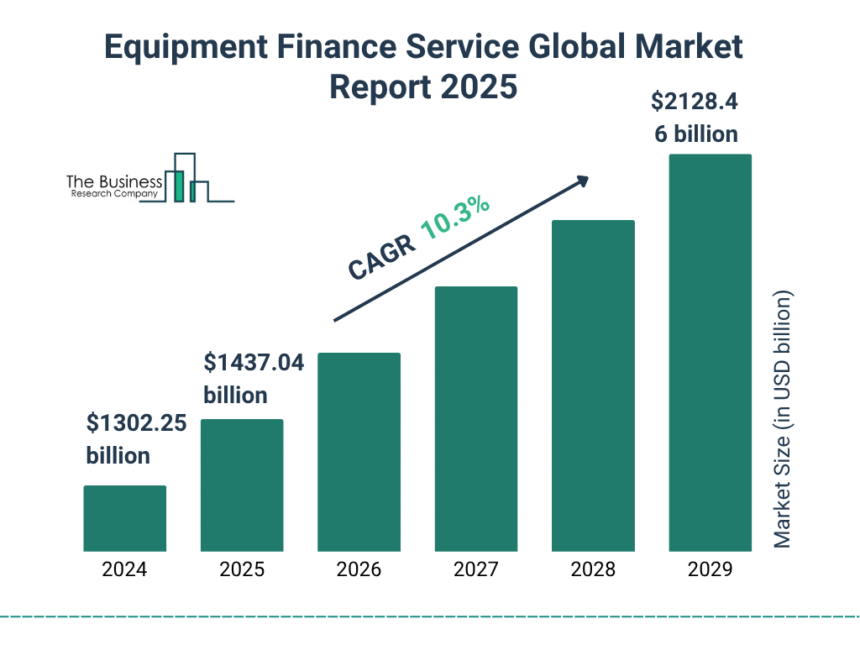
The capital landscape in late 2025 has stabilized significantly compared to the volatility of the early 2020s. For business owners, this stability brings a critical window of opportunity. Whether you are upgrading a fleet of Class 8 trucks, outfitting a new medical facility, or investing in heavy “yellow iron” for construction projects, the cost of capital is now a metric you can forecast with reasonable precision.
- The 2025 Economic Backdrop: Rates and Trends
- The Buy Analysis: Ownership and Equity
- The Lease Analysis: Flexibility and Cash Flow
- Industry-Specific Financing Strategies
- 1. Construction and Heavy Industry (“Yellow Iron”)
- 2. Medical and Healthcare
- 3. Transportation and Logistics
- The Mathematics of the Decision
- How to Qualify for Prime Rates in 2025
- Common Pitfalls to Avoid
- Conclusion: Actionable Next Steps
However, the age-old question remains: Should you lease or buy?
In 2025, the answer is no longer just about cash flow. It involves a complex interplay of the reinstated 100% Bonus Depreciation rules, the expanded Section 179 limits, and the current interest rate environment governed by the Federal Reserve’s recent policy shifts.
This comprehensive guide analyzes the 2025 equipment financing market, offering a detailed breakdown of rates, tax implications, and strategic structures to help you maximize your return on investment.
The 2025 Economic Backdrop: Rates and Trends
Before dissecting the lease-versus-buy decision, we must understand the “cost of money” in the current market. Following the Federal Reserve’s stabilization measures throughout 2024 and the rate adjustments in Q3 2025, borrowing costs have found a new equilibrium.
Current Equipment Financing Interest Rates (Q4 2025)
Equipment financing is unique because the asset itself serves as collateral. This reduces risk for the lender and typically secures lower rates than unsecured working capital loans.
| Borrower Credit Tier | Estimated APR (Buy/Loan) | Lease Rate Factor (Monthly) |
| Prime (720+) | 5.50% – 7.25% | 0.028 – 0.032 |
| Near Prime (660-719) | 7.50% – 10.50% | 0.033 – 0.038 |
| Mid-Market (620-659) | 11.00% – 16.00% | 0.039 – 0.045 |
| Sub-Prime (<620) | 18.00% + | 0.046 + |
Note: These rates are averages for “A” tier equipment (trucks, construction machinery, manufacturing tools). Specialized or rapidly depreciating assets (like IT hardware) may carry a risk premium of 1.5% to 3.0%.
Key Market Indicators
- Lender Appetite: Approval ratings in October 2025 hit a 5-year high. Banks are eager to lend on tangible assets as the economy steadies.
- Tech-Enabled Underwriting: In 2025, AI-driven underwriting allows for “app-only” approvals up to $250,000 within hours, reducing the documentation burden for strong borrowers.
- Green Financing: Lenders are offering rate discounts (25-50 basis points) for energy-efficient equipment, such as electric forklifts or solar-integrated manufacturing units.
The Buy Analysis: Ownership and Equity
When you “buy” equipment using a loan (Equipment Finance Agreement or EFA), you take title to the asset immediately. The lender places a lien on the equipment, but you own it.
The Major Advantage: Section 179 and Bonus Depreciation
The tax environment in 2025 is heavily skewed in favor of purchasing. The “One Big Beautiful Bill” (OBBB) legislation effectively supercharged small business expensing.
- Section 179 Limit (2025): The cap has been raised to $2,500,000. This means you can deduct the full purchase price of qualifying equipment from your gross income, up to this limit.
- The Phase-Out Threshold: The deduction begins to reduce dollar-for-dollar once your total equipment purchases for the year exceed $4,000,000.
- Bonus Depreciation: Critical for 2025, bonus depreciation has been reinstated to 100%. This allows you to write off the entire cost of eligible assets in year one, even if you hit the Section 179 cap.
Scenario:
Your manufacturing company buys a $200,000 CNC machine in December 2025.
- Cash Outlay: $0 (if 100% financed).
- Tax Deduction: $200,000 immediately.
- Tax Savings: Assuming a 30% corporate tax rate, you save $60,000 in taxes.
- Net Cost: effectively $140,000.
When to Buy (Loan)
- Long Lifespan: The equipment will be useful for 5+ years (e.g., shelving, heavy machinery, office furniture).
- Equity Building: You want to build the asset base of your balance sheet.
- Total Cost: You have access to Prime rates (under 8%), making the total cost of ownership lower than leasing.
The Lease Analysis: Flexibility and Cash Flow
Leasing is effectively renting the asset for a fixed term. In 2025, leasing accounts for nearly 40% of all equipment acquisition, driven largely by the technology and medical sectors.
Types of Leases
- Capital Lease ($1 Buyout): Similar to a loan. You pay monthly, and at the end, you buy the equipment for $1. You get the tax benefits (Section 179) because you are considered the owner for tax purposes.
- Operating Lease (FMV): A true rental. At the end of the term, you can return the equipment, upgrade to new models, or buy it at Fair Market Value (FMV).
The “Off-Balance Sheet” Myth
Since the implementation of ASC 842 lease accounting standards, most operating leases must now appear on your balance sheet as a “Right of Use” asset and a corresponding liability. However, for tax purposes, operating lease payments are still treated as a 100% deductible operating expense (OpEx), which simplifies accounting for many SMEs.
When to Lease (FMV)
- Technology Risk: You are buying IT equipment (servers, laptops) or medical imaging devices that will be obsolete in 36 months.
- Cash Flow Sensitivity: Leases often require 0-1 payments upfront, whereas loans may require a 10-20% down payment.
- Project-Based Work: You need an excavator for a 24-month contract. Leasing matches the expense to the revenue generation period.
Industry-Specific Financing Strategies
The “best” option depends heavily on your industry vertical. Here is how top sectors are structuring their capital in 2025.
1. Construction and Heavy Industry (“Yellow Iron”)
- Trend: Buying.
- Reasoning: Excavators, bulldozers, and cranes hold their value incredibly well. A 5-year-old Caterpillar unit might sell for 60-70% of its original price.
- Strategy: Use an Equipment Finance Agreement (EFA). Finance 100% of the cost. Utilize the Section 179 deduction to offset the profitable income from your contracts. Sell the asset after 7 years to recapture equity.
2. Medical and Healthcare
- Trend: Leasing (Hybrid).
- Reasoning: Diagnostic equipment (MRI, CT, Ultrasound) advances rapidly. Owning a 10-year-old MRI machine is a liability.
- Strategy: Use a 48-month FMV lease. This keeps your technology state-of-the-art. However, for practice build-outs (tables, waiting room furniture, lighting), use a loan/buy structure as these assets have long lives.
3. Transportation and Logistics
- Trend: Split Strategy.
- Reasoning: The Class 8 truck market in 2025 has seen prices stabilize, but maintenance costs on older units have skyrocketed.
- Strategy: Large fleets are leasing trucks (3-year cycles) to keep them under warranty and minimize downtime, while buying trailers which have a 10-15 year lifespan and low obsolescence risk.
The Mathematics of the Decision
Let us run the numbers on a $100,000 piece of equipment over a 5-year term.
Option A: Bank Loan (Buy)
- Rate: 7% Interest.
- Down Payment: $20,000 (20%).
- Monthly Payment: ~$1,580 (on remaining $80k).
- Total Cash Paid: ~$114,800.
- Asset Value at End (30% residual): +$30,000.
- Net Cost: $84,800.
Option B: FMV Lease
- Rate Factor: Equivalent to roughly 9%.
- Down Payment: $0 (First & Last only).
- Monthly Payment: ~$1,950.
- Total Cash Paid: ~$117,000.
- Asset Value at End: $0 (You return it).
- Net Cost: $117,000.
Analysis:
The Loan option is $32,200 cheaper in the long run if you have the cash for the down payment and the equipment retains value. However, the Lease option preserved $20,000 of working capital on Day 1, which could be used for marketing or payroll to generate higher returns elsewhere.
How to Qualify for Prime Rates in 2025
Lenders in 2025 are data-rich. They look beyond just the credit score. To secure the 5.5% – 7% tier, ensure the following:
- Debt Service Coverage Ratio (DSCR): Lenders want to see a DSCR of 1.25x or higher. This means for every $1 of debt payment, your business produces $1.25 in net operating income.
- Time in Business: The “Magic Number” is 2 years. Rates drop significantly after your 24th month of operation.
- Bank Statements: Maintain positive average daily balances. Lenders often scan 3 months of banking data to ensure you are not constantly operating in overdraft.
- Comparable Credit: If you are asking for a $200,000 truck loan, lenders want to see that you have successfully paid off a $50,000 car loan or similar debt in the past.
Common Pitfalls to Avoid
- Blanket Liens: Be careful with General Security Agreements (GSAs) from online lenders. They may place a lien on all your business assets, not just the equipment you bought. This can handcuff you from getting future funding.
- Prepayment Penalties: Ask if the loan is “Simple Interest” or a “Stream of Payments.” A stream of payments contract means you owe all the interest even if you pay it off early. Always negotiate for a discount on early payoff.
- Ignoring Soft Costs: Installation, training, and shipping can add 20% to the equipment cost. Ensure your financing approval covers these “soft costs” so you do not have to pay them out of pocket.
Conclusion: Actionable Next Steps
The 2025 equipment finance market favors the bold but prepared business owner. With the Section 179 limit at $2.5 million and interest rates stabilizing, the cost of inaction is likely higher than the cost of capital.
Your Action Plan for this week:
- Audit Your Needs: List all equipment acquisitions required for Q1 and Q2 2026.
- Check Your Credit: Pull a personal credit report and review your business credit profile on Dun & Bradstreet or Equifax.
- Consult Your CPA: Before signing any contract, ask your accountant specifically about the “2025 Section 179 and Bonus Depreciation” impact on your specific tax liability.
- Get Pre-Approved: Do not wait until you are at the dealership. Secure a credit facility now so you can negotiate as a cash buyer.
The window to maximize 2025 tax benefits closes on December 31st. By choosing the right structure, leasing or buying, you are not just acquiring a tool; you are engineering a more profitable financial future for your business.
Sources and Data References
- IRS Form 4562 Instructions (2025): https://www.irs.gov/forms-pubs/about-form-4562
- Federal Reserve Interest Rate Policy: https://www.federalreserve.gov/monetarypolicy.htm
- Equipment Leasing and Finance Association (ELFA) Outlook: https://www.elfaonline.org
- Section 179 Official Calculator: https://www.section179.org
- Bureau of Labor Statistics (PPI Data): https://www.bls.gov/ppi